Everyday objects surround us—items so familiar that we rarely stop to consider their origins. The toothbrush we use each morning, the fork we eat with, and the humble paperclip holding our documents together all have histories that stretch back centuries, often filled with strange twists, happy accidents, and surprising innovations.
The ordinary things we take for granted today didn’t always exist in their current form. Many evolved through unexpected discoveries, strange prototypes, or even sheer luck. Exploring the quirky history of these everyday items offers a fascinating glimpse into human creativity and problem-solving.
The Accidental Origins of Everyday Objects
Many of the things we use daily were never originally intended for their current purpose. Take the microwave oven, for instance. This kitchen staple exists thanks to an accidental discovery in the 1940s by engineer Percy Spencer. While working with radar technology, Spencer noticed that a chocolate bar in his pocket melted near a magnetron tube. Curious, he experimented with popcorn kernels and an egg, eventually realizing that microwaves could be used for cooking.
Similarly, Post-it Notes owe their existence to a failed experiment. In the 1960s, a scientist at 3M, Dr. Spencer Silver, was trying to develop a super-strong adhesive but instead created one that barely stuck. For years, it seemed useless—until a colleague, Art Fry, used it to mark pages in his hymnal book. That “weak” adhesive became the foundation for one of the most popular office supplies in history.
The Evolution of Common Tools
Some everyday objects have changed dramatically over time. Consider the humble fork. While knives and spoons have existed for millennia, forks were once considered strange and even improper. In medieval Europe, eating with one’s hands was common, and early forks—often two-pronged—were mainly used for spearing meat.
It wasn’t until the 17th century that forks gained popularity, particularly in Italy and France, where aristocrats embraced them as a symbol of refinement. Even then, they were mocked in England as unnecessary. But as dining etiquette evolved, forks became essential, eventually transforming into the multi-pronged utensils we use today.
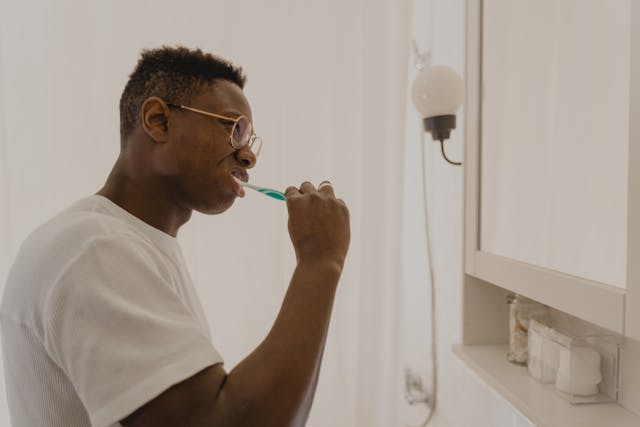
Toothbrushes also have a surprising history. Ancient civilizations used twigs, feathers, and even crushed shells to clean their teeth. The modern toothbrush, with its bristle-and-handle design, didn’t appear until the late 1700s, when an English prisoner named William Addis fashioned one from bone and boar bristles. Over time, innovations like nylon bristles and ergonomic designs led to the toothbrushes we know today.
Fashion and Function: The Story of Pockets
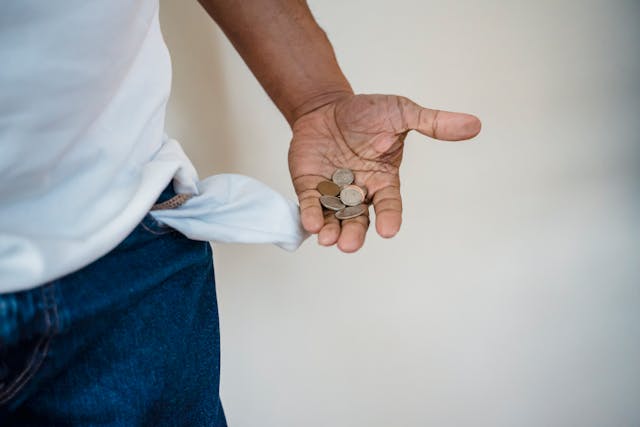
Pockets seem like a simple convenience, but their history is anything but straightforward. In medieval times, clothing lacked built-in pockets. Instead, people carried small pouches tied to their belts. These pouches served as a form of storage, holding coins, keys, and other valuables.
By the 17th century, pockets were sewn directly into men’s clothing, while women continued to wear separate pockets hidden beneath their skirts. This gender divide persisted for centuries, with women’s clothing often designed without practical pockets—a trend that continues today in some fashion styles. The evolution of pockets reflects changes in fashion, utility, and even gender roles over time.
How the Paperclip Became Essential
A tiny piece of bent wire may not seem revolutionary, but the paperclip has a history of clever design and even wartime symbolism. The paperclip, as we know it today, was patented in the late 1800s by Norwegian inventor Johan Vaaler. While it wasn’t the first attempt at a fastener for papers, it became the most successful due to its simplicity and ease of use.
During World War II, when Norway was under Nazi occupation, paperclips became a silent symbol of resistance. Norwegians wore them on their lapels as a subtle way of expressing solidarity, since the loops symbolized unity. The act was eventually banned, but the paperclip remained a symbol of quiet defiance.
The Bizarre Beginnings of the Rubber Band
The rubber band is one of the simplest yet most useful inventions, but its history is surprisingly unconventional. Natural rubber had been used by indigenous peoples in the Americas for centuries before European explorers encountered it. However, rubber was initially unstable, melting in the heat and cracking in the cold.
The breakthrough came in the 19th century when Charles Goodyear accidentally dropped a mixture of rubber and sulfur onto a hot stove, discovering the process of vulcanization. This made rubber durable and elastic, paving the way for countless uses—including the humble rubber band, which was first patented in 1845.
The Unexpected History of Bubble Wrap
Bubble wrap is often associated with packaging and the joy of popping its air-filled pockets, but it was originally intended to be wallpaper. In 1957, engineers Alfred Fielding and Marc Chavannes attempted to create textured wallpaper by sealing two plastic sheets together with air bubbles inside. The idea failed as a home decor trend, but they soon realized its potential as a protective material for shipping.
IBM became one of the first major companies to use bubble wrap when they needed a way to safely package computers. Since then, it has become an essential packing material—and an irresistible source of stress relief for anyone who enjoys the satisfying pop of each bubble.
Why Ordinary Objects Have Extraordinary Stories
The history of everyday objects is a reminder that innovation often comes from unexpected places. Many of the things we rely on today were born out of mistakes, curiosity, or necessity. These inventions have shaped our daily lives in ways we rarely consider, turning simple materials into indispensable tools.
Looking at the world through the lens of history makes even the most ordinary objects feel remarkable. Every item has a story, and behind every convenience, there’s a moment of inspiration, trial and error, or pure serendipity. So next time you use a paperclip, fork, or toothbrush, take a moment to appreciate the strange and fascinating journey it took to get into your hands.